

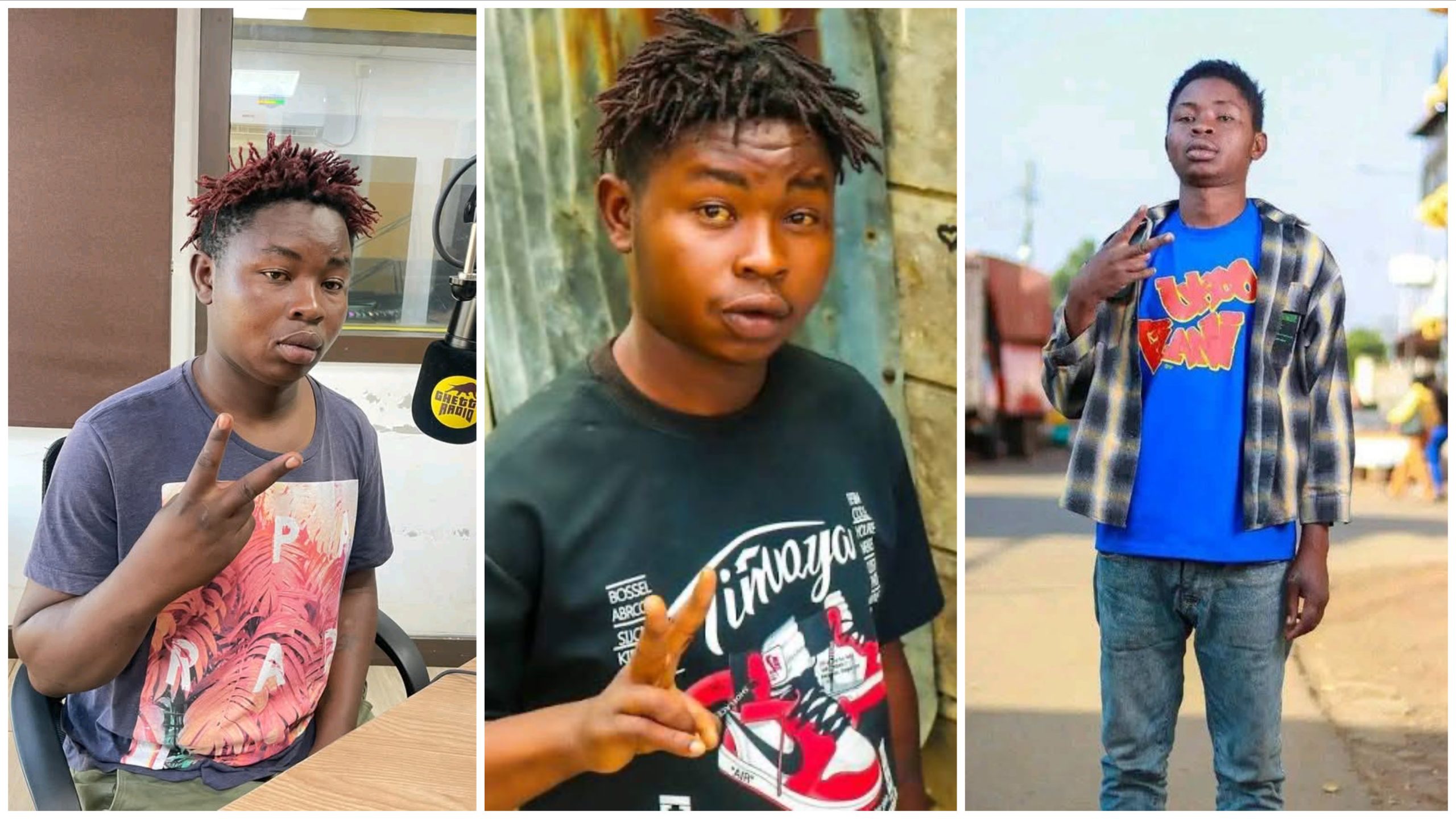
Edgar Waititu, popularly known as Stoopid Boy, is dead.
The news has left Kenya’s Arbantone scene in shock and sent social media into mourning.
But beneath the tributes, condolences and reposted videos lies a much harder question:
Did we fail him while he was still alive?
Stoopid Boy was not just another name on the Kenyan entertainment scene.
He was a young father.
He was a son.
He was an artiste who came from the streets and managed to turn his talent into a sound that thousands of young Kenyans could identify with.
His breakthrough hit, “G Bag Na Jug,” propelled him into the spotlight and made him one of the recognisable faces of the Arbantone wave.
For a young man from Gota City, it was supposed to be the beginning of something bigger.
Raveen Domi confirms that G Baga Jat hitmaker Stoopid Boy took his own life. pic.twitter.com/iPPY2RWOES
— John Mutongoi (@johnmtongoi) August 27, 2026
Instead, his life became a painful story of talent, fame, addiction, poverty, mental-health struggles and a society that often pays attention only when tragedy strikes.
TODAY, EVERYONE REMEMBERS STOOPID BOY
Look at social media today.
Everyone knows Stoopid Boy.
Everyone remembers his songs.
Everyone has a favourite video.
Everyone is sending condolences.
Everyone is saying he was talented.
But where were we when he was struggling?
Where were the people who could have helped him build a sustainable career?
Where were the structures to support him when addiction became part of his life?
Where were the opportunities that could have allowed him to earn a dignified living from his talent?
And where were we when his struggles became entertainment for the internet?
These are uncomfortable questions.
But they need to be asked.
Because a condolence message cannot replace the help someone needed while they were alive.
HIS TALENT WAS NEVER THE PROBLEM
Stoopid Boy could make music.
He had charisma.
He had a recognisable personality.
He had an audience.
He had the rare ability to connect with ordinary young Kenyans.
The problem was never a lack of talent.
The problem was what happened after the cameras stopped rolling.
A young artiste can go viral in Kenya today and still struggle to pay rent tomorrow.
Thousands can watch your video while you are personally fighting poverty.
Millions can consume your content while you have no healthcare, no stable income and no professional support system.
That is the ugly contradiction of the digital entertainment economy.
We consume the talent, but rarely invest in the person.
ADDICTION IS NOT A JOKE
Stoopid Boy’s struggles with alcohol and substance use became public.
In 2025, Oga Obinna stepped in and helped him seek rehabilitation.
For a moment, there was hope.
There was a chance to start again.
But recovery is not as simple as checking into a rehabilitation centre and walking out cured.
People battling addiction often return to the same poverty, same environment, same pressures and same unresolved problems that contributed to their struggles in the first place.
They need continued support.
They need work.
They need counselling.
They need people around them who will not exploit their vulnerability.
They need a reason to believe that tomorrow can actually be better.
Without that support, the road back can be brutally difficult.
WE TURNED HIS PAIN INTO CONTENT
This is where Kenya’s social-media culture must look in the mirror.
When Stoopid Boy was struggling, his behaviour became content.
His appearance became content.
His problems became content.
His vulnerability became entertainment.
People laughed.
People recorded.
People shared.
People chased views.
But somewhere behind every viral clip was a real human being.
A father.
A son.
A friend.
A person struggling to survive.
There is nothing wrong with holding public figures accountable.
But there is something deeply wrong when someone’s suffering becomes a business model.
We must learn the difference between entertainment and exploitation.
OGA OBINNA’S QUESTIONS CANNOT BE IGNORED
Oga Obinna, who previously helped Stoopid Boy access rehabilitation, has criticised Kenyans who allegedly bullied and used the artiste for online content instead of helping him.
His reaction has sparked an important debate about the responsibility of content creators, fans and the wider entertainment industry.
ALSO READ: Sharon Otieno’s Parents Seek Car, Millions, Land and House Obado Promised Their Daughter
Because if everyone knew someone was struggling, why did the solution become mockery?
Why did clout become more important than compassion?
Why did we wait for tragedy before starting the conversation?
And why does Kenya’s creative industry have so few reliable structures for young artistes who fall into crisis?
These questions are bigger than Stoopid Boy.
They concern thousands of young Kenyans.
THE CREATIVE INDUSTRY HAS A SERIOUS PROBLEM
Kenya celebrates its artistes when they are useful.
We want them at political rallies.
We want them at events.
We want them to entertain crowds.
We want them to make songs for campaigns.
We want them to create viral content.
But when the music stops, many are left alone.
There are talented young people who cannot afford professional management.
Others have no financial planning.
Some have no healthcare.
Some are battling addiction.
Others are dealing with depression, unemployment and crushing poverty.
Yet the industry often has no safety net.
A hit song should not be the only thing standing between a young artiste and poverty.
HIS TWO DAUGHTERS HAVE LOST THEIR FATHER
And now comes the part that should matter most.
Stoopid Boy leaves behind two daughters.
For the internet, this will eventually become old news.
Another story will trend.
Another celebrity will dominate timelines.
Another controversy will take over.
But for his daughters, there will be no scrolling past this.
They have lost their father.
His family has lost a son.
His friends have lost a friend.
His community has lost one of its own.
Their pain will remain long after the hashtags disappear.
That is why his family deserves more than sympathy.
They deserve support.
WE CANNOT KEEP MOURNING THE SAME WAY
Kenya has become very good at mourning.
We write long posts.
We share photographs.
We play the deceased’s songs.
We say, “Rest in peace.”
Then, after a few days, we move on.
Until the next young Kenyan dies.
Then we repeat the cycle.
But what if we changed the pattern?
What if we started helping people before they became headlines?
What if we treated addiction as a health and social problem instead of a joke?
What if we stopped turning vulnerable people into content?
What if young artistes had access to counselling, rehabilitation, professional management and financial support?
What if talent from the estates was treated as an investment rather than cheap entertainment?
STOOPID BOY SHOULD NOT BE REMEMBERED ONLY IN DEATH
Edgar Waititu had a gift.
He had a voice.
He had a story.
He had dreams.
He had children who needed him.
ALSO READ: Janelle Monae And Lupita Nyong’o Take Their Relationship Public!
He deserved the opportunity to rebuild his life.
Whatever the circumstances surrounding his death, his story has left Kenya with questions that cannot simply be buried with him.
Where were we when he needed us?
Where were the opportunities?
Where were the support systems?
Where was the dignity?
And most importantly:
How many more young Kenyans must we lose before we decide to care while they are still alive?
Today, Stoopid Boy is trending because he is gone.
Tomorrow, the internet will move on.
But his daughters will still be here.
His family will still be grieving.
And somewhere across Kenya, another talented young person may be fighting the same battles in silence.
Let’s not wait for another funeral to discover that we should have helped.
Rest in peace, Stoopid Boy.
May your story force us to do better for those who are still here.